
Радио сам скоро годину дана. Урадим један део, па га пустим мало на миру, па гледам како би то требало да звучи мени који сам двојезичан. Жеља ми је била да приближим нас ономе код њих што ваља, истакао Селић
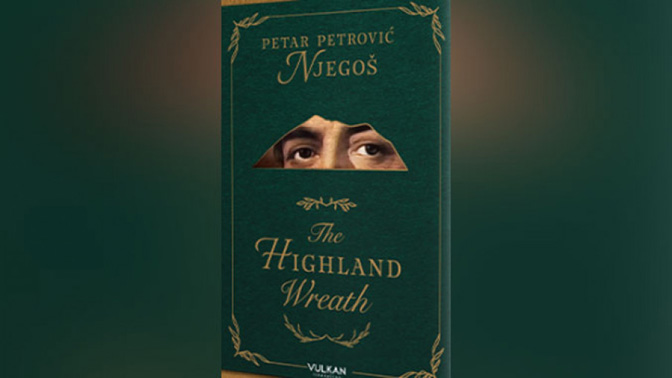
Фото: Вулкан
Објављено је ново издање „Горског вијенца“ Петра II Петровића Његоша на енглеском језику, у преводу писца и есејисте Момчила Селића, које представља важан допринос међународној рецепцији Његошевог дела.
Дело у којем је сачуван Његошев ванвременски стих и ритам народног десетерца, Момчило Селић видео је као вредно штиво које заслужује и међународно разумевање и признање. С обзиром на разлике између два језика, речи, фразе и изрази су пажљиво бирани како би се народна епика и драмска радња аутентично пренели.
„Сваки језик има свој ритам, своје форме које већ формом позивају и дају на знање да се ради о поезији. Има неких превода наслова када кажу Mountain Garland, ту су и једна и друга реч погрешне. Оне исто значе, али код њих они прави, људи од духа, су хајлендерс, значи горштаци“, објашњава Момчило Селић, писац и преводилац.
Горски вијенац представља много више од историјског песничког записа. То је приказ Црне Горе у време друштвене сецесије, спољашњих притисака, 2819 моћних стихова којима је Његош вешто кројио запис једне епохе на Балкану.
„Ја сам то радио скоро годину дана. Урадим један део, па га пустим мало на миру, па гледам како би то требало да звучи мени који сам двојезичан. Жеља ми је била да приближим нас ономе код њих што ваља“, истакао је Селић.
Селићев превод Горског вијенца, био је прилика за нова тумачења и ново разумевање Балкана, за превод у коме дух оригинала остаје сачуван међу страницама.
Припремила: Анђела Ђечевић
Опрема: Стање ствари
Одломак превода са сајта издавачке куће Вулкан
Original title:
Petar Petrović Njegoš GORSKI VIJENAC
This work is a part of Serbian literary heritage. This edition © 2025 by Vulkan izdavaštvo
Rendered into English and annotated by Momčilo Selić
TABLE OF CONTENTS
Introductory Note…………………………………………………………….. 9
The Highland Wreath……………………………………………………… 11
About the author…………………………………………………………… 183
The Parting Address of Ivana Tomova Petrović (born Proroković), at the burial of her son, the Prince-Bishop
Petar II Petrović Njegoš………………………………………………….. 187
The ethics and heroism of Petar Petrović Njegoš’s
The Highland Wreath……………………………………………………… 189
Translator’s note……………………………………………………………. 201
Notes and explanations………………………………………………….. 203
Numbers on the right side of the verses and lines signify their order in the notes and explanations.
A phonetic rendering of Serb and other names is given in it, as well as appropriate explanations of their origin and meaning.
Beside the existing, numerous published versions of The High land Wreath, the translator, Momčilo Selić, has opted to use and consult the Горски вијенац, Петар II Петровић Његош / Разговори с Његошем, Љуба П. Ненадовић, edited and published by the: Књижевне новине – Енциклопедија, Belgrade 1995.
THE HIGHLAND WREATH
HOMAGE TO THE MORTAL DUST OF SERBIA’S FATHER 1
Let this age stand upright among the eons, Looming above men for whatever may come! For, eight selfsame siblings it spawned at once,
To fill Bellona’s cradle before trampling the Earth: 2
Napoleon, Charles, Blucher, Wellington, and Suvorov, 3
Karageorge the Tyrants’ Irk, Schwartzenberg and Kutuzov, Each baptized by an awesome Ares in the glory of gore, 4
To sweep foreordained and unavoidable battlefields. As lions spring from the mighty forests of the night, And geniuses from nations of substance and spleen, So do our ancestral lands offer chances for deeds of Awesome worth, to be crowned with justly earned Garlands of acclaim, and of never-ending fame…
Yet Serbia’s hero, Karageorge, had to slash a Tortuous path to stir the Serbs against their foe, To prod them from their death-like slumber by Breathing a new life into their souls – to fill
Their chests again with pride, with him in lead! Lionhearted the Serbs became, as he made
The Sultan’s armies shake with fear, while The Istanbul Turks swore revenge upon Their sabers – their only talisman,
Or, way.
. .. .. .. .. . .. .. .. .. . .. .. .. . .. .. .. .. .. . .. .. .. .. . .. .. .. .. . .
. .. .. .. .. . .. .. .. .. . .. .. .. . .. .. .. .. .. . .. .. .. .. . .. .. .. .. . .
. .. .. .. .. . .. .. .. .. . .. .. .. . .. .. .. .. .. . .. .. .. .. . .. .. .. .. . .
. .. .. .. .. . .. .. .. .. . .. .. .. . .. .. .. .. .. . .. .. .. .. . .. .. .. .. . .
. .. .. .. .. . .. .. .. .. . .. .. .. . .. .. .. .. .. . .. .. .. .. . .. .. .. .. . .
. .. .. .. .. . .. .. .. .. . .. .. .. . .. .. .. .. .. . .. .. .. .. . .. .. .. .. . .
But, a hero’s steps are dogged by tragic fate, As he must often bear his laurels headless.
. .. .. .. .. . .. .. .. .. . .. .. .. . .. .. .. .. .. . .. .. .. .. . .. .. .. .. . .
. .. .. .. .. . .. .. .. .. . .. .. .. . .. .. .. .. .. . .. .. .. .. . .. .. .. .. . .
. .. .. .. .. . .. .. .. .. . .. .. .. . .. .. .. .. .. . .. .. .. .. . .. .. .. .. . .
. .. .. .. .. . .. .. .. .. . .. .. .. . .. .. .. .. .. . .. .. .. .. . .. .. .. .. . .
. .. .. .. .. . .. .. .. .. . .. .. .. . .. .. .. .. .. . .. .. .. .. . .. .. .. .. . .
. . . .. . . . .. . . . . .. . . . . .. . . . . .. . . . . . .. . . . . . .. . . . .. . . . . .. . . .
Generations tally their deserts to each and all, good or bad! Boris’s and Vukašin’s names are stamped with shame, 5
But Piso’s memory must not stain the memory of ages, 6
Aegisthus’ end came from Heaven, through Orestes. 7
. .. .. .. .. . .. .. .. .. . .. .. .. . .. .. .. .. .. . .. .. .. .. . .. .. .. .. . .
. .. .. .. .. . .. .. .. .. . .. .. .. . .. .. .. .. .. . .. .. .. .. . .. .. .. .. . .
. .. .. .. .. . .. .. .. .. . .. .. .. . .. .. .. .. .. . .. .. .. .. . .. .. .. .. . .
. .. .. .. .. . .. .. .. .. . .. .. .. . .. .. .. .. .. . .. .. .. .. . .. .. .. .. . .
. .. .. .. .. . .. .. .. .. . .. .. .. . .. .. .. .. .. . .. .. .. .. . .. .. .. .. . .
. .. .. .. .. . .. .. .. .. . .. .. .. . .. .. .. .. .. . .. .. .. .. . .. .. .. .. . .
Yet, your tomb shines through all the slander. But, what can dim the glow of your soul?
For Darkness cannot extinguish Light But only make It seem brighter,
Adding forever to the sheen of Serb glory, Creating an unfathomable depth of joy.
. .. .. .. .. . .. .. .. .. . .. .. .. . .. .. .. .. .. . .. .. .. .. . .. .. .. .. . .
. .. .. .. .. . .. .. .. .. . .. .. .. . .. .. .. .. .. . .. .. .. .. . .. .. .. .. . .
. .. .. .. .. . .. .. .. .. . .. .. .. . .. .. .. .. .. . .. .. .. .. . .. .. .. .. . .
. .. .. .. .. . .. .. .. .. . .. .. .. . .. .. .. .. .. . .. .. .. .. . .. .. .. .. . .
. .. .. .. .. . .. .. .. .. . .. .. .. . .. .. .. .. .. . .. .. .. .. . .. .. .. .. . .
. .. .. .. .. . .. .. .. .. . .. .. .. . .. .. .. .. .. . .. .. .. .. . .. .. .. .. . .
Great Dušan’s birth is a Serb lady’s gift, 8
As is their honor of breast-feeding Obilićes, 9
For heroes – such as the true knights of our time – Serbian ladies keep bringing forth even today
Our Serbdom basking in well-born men!
To chase away the curse of our lineage! 10
By staying true to our Holy Task!
In Vienna, on New Year’s Day 1847.
CAST OF CHARACTERS
Prince-Bishop Danilo: Secular and religious
leader of Montenegro
Hegumen Stefan: A blind old abbot
Janko Đurašković: Headman
Radonja: Headman
Vukota: Headman
Ivan Petrović: Headman
Count Rade: Prince-Bishop Danilo’s brother
Count Bajko: Local chieftain
Count Rogan: Local chieftain
Count Janko: Local chieftain
Count Nikola: Local chieftain
Duke Draško: Clan military leader
Duke Milija: Clan military leader
Duke Stanko: Clan military leader
Duke Batrić: Clan military leader
Tomaš Martinović
Obrad
Vuk Raslapčević
Vukota Mrvaljević
Vuk Tomanović
Multitude
Bogdan Đurašković
Vuk Mićunović
Vuk Mandušić
Vuk Lješevostupac
Priest Mićo
Batrić’s sister
Hadži-Ali Medović: Turkish judge
Skender-Aga: Turkish nobleman
Mustaj-Kadi: Turkish judge
Arslan-Aga Muhadinović
Ferat Začir: Chief Turkish bodyguard
Envoy Osman: A Turk
An old woman
Vuk Marković
First soldier
Second soldier
A Cuca tribesman
A Montenegrin wedding guest
A Turkish wedding guest
A student
Students
A youth
Vuk Borilović
Novak Velestovac: Prince-Bishop’s bodyguard
Novak Dupiljanin: Prince-Bishop’s bodyguard
Pimo: Standard-bearer
Youths
People
A PENTECOSTAL ASSEMBLY ON MOUNT LOVĆEN
It was the dead of night, and everyone was sleeping.
PRINCE-BISHOP DANILO (talking to himself) Damn the Devil with his seven mantles
His two swords and the two crowns to boot,
A Turk’s great-grandson brandishing his Koran, Followed by swarms of his own, accursed brood, Pouring out to lay bare the entirety of Earth itself, Just as locusts gobble up or mow down the fields! For, were it not for the human ramparts of France To keep the Arab tide from flooding the Globe,
As an unholy nightmare had bewitched Osman 11
Gifting him with a Moon instead of an apple,
And with Orkhan, Europe’s murderous guest! 12
Byzantium being but Theodora’s playground, 13
Enticingly lit by the dim Star of Destruction!
While Paleologus kept calling upon Murat, 14
To bury the Greeks along with the Serbs.
And Branković conniving with Gertuka, 15
Unaware of a Muhammad in his train! 16
Along with Asia, their spawning nest, The Devil’s brood swallowed nations:
One per day, as an owl does a sparrow:
So did Murat devour Serbia, and Bayazid
Bosnia, Murat Epirus, and Muhammad 17
Greece, two Selims Cyprus and Africa, 18
Each eager to grab his share, leaving Nothing to anyone – only horror, For remembrance!
Tiny is our world for Hell’s greed, To It insatiable, let alone fulfilling!
Thus Janko stands by a dead Vladislav, 19
After failing to do so while he was alive!
And Skenderbeg’s heart equaled Obilić’s, 20
Yet he met his end as a heartbroken exile. What am I to do – who’ll stand by my side? Helping hands are few, and strength sparse: I’m whirling like a strand of straw in a storm, A mere, forlorn castoff, lacking all kin!
My nation’s asleep in deathlike slumber
Nor can any parent wipe my tears away: I suffer as if under an overturned sky, Heedless of all my cries and prayers.
Hades has become my only abode, 21
And all men but horrible shadows, Bewail my day, and my sorry fate! Woe is my extinguished Serbdom, And my survival amidst such evil, Which I must face in its direst form! For, after someone’s head is smashed,
His limbs and organs suffer a hideous death – May God destroy you for being but a plague! Since even half a world is a mean offering
For you, having poisoned it with your evil, As you keep spewing your bile upon us, As if Serbia is but a beggar’s sacrifice: Spreading from Danube, to the sea.
There you sit on a snatched throne, Waving high your bloody scepter, Shaming God from a “holy” altar,
Having stuck a minaret upon 22
The remnants of a Cross!
Yet, Its Shadow is what you’d besmirch Which the Serbs took along into their exile
Into these mountains, to keep their spirits high. In remembrance of their stalwart forebears,
It as well you’ve managed to soak in blood – Yours also, but ours over a hundredfold!
So behold your tyrant emperor’s skills, All taught to him by Satan Himself:
“There’s no way to subdue Montenegro – 23
At least not totally – to make it your own; So all of this is what always you must do…” And, the demonic messiah of a false faith Began offering sundry sweets to the Serbs, May Our Lord damn the accursed outcasts! What is a Turkish faith doing amongst you?
How can you disregard your ancestors’ curse? What can you offer to our own Miloš Obilić, As well as all the other Serb champions – Alive as long the Sun does shine?!
For, when I ponder upon our present-day fate, Horrors’ conflagrations beset me from everywhere Of my own brothers cutting each others’ throats With no lack whatever of bloodthirsty foes –
Set to destroy our brides’ very seed! Monstrous day, may God erase you For having sent me into this world! As I curse the yesteryear relentlessly For not letting the Turks dispatch me And save my people from chagrin.
(Извор)
Categories: Гостинска соба
Ferat Začir: Chief Turkish bodyguard
У већини издања, па и у првом, на овом месту стоји ФЕРАТ ЗАЧИР, кавазбаша; А. Младеновић (Горски вијенац, Чигоја штампа, Београд, 2001), упоређујући рукопис и прво издање (ово лице изговара само стихове 1016–1023), показује да је заправо реч о зачирском кавазбаши: на тим местима стоји ФЕРАТЪ ЗАЧИР. – дакле с тачком уместо немог знака ъ на крају речи „ЗАЧИР“ (село у Ријечкој нахији).
А треба: ФЕРАТ, зачирски кавазбаша
Свака част г-дину Селићу
Поезија је оно што не може да се преведе (и то је рекао неки од профи песника, Елиот мислим).
Чак ни Хомер није успео да преведе србску епику, десетерац. Тачније, успео је да је преведе, и то је у преводу најбоља класична грчка поезија – али ми Срби знадемо да то није то.
У најбољем случају, превод може да послужи као тизер просветљеним ентузијастима (попут Гетеа, Грима…) да се потруде да науче србски. Онако како заљубљеници у Хомера нису жалили и не жале труда да науче грчки.
@Евсевије,
Поштовани, некад сте у праву, а некада не. Ја сам на „позитивну“ страну па волим да истакнем оно што је право, тачно, добро, истинито или лепо. Тако, у Вашем горњем обраћању посебно се издваја тврдња „Чак ни Хомер није успео да преведе србску епику, десетерац“. Ово је тачно и истинито да боље не може бити. Није Хомер успео заиста – из простог разлога јер није никад покушао! Нешто му није ни могло пасти на памет. Али ево, миленијумима касније, заслугом СтСт могуће је објавити и тај нонсенс. Тај цивилизацијски напредак невероватних пропорција – нешто што ни у луду главу није могло прићи, сада се прокламује кроз електронске средства дез/информисања. Боже нас сачувај и саклони!
Поштовани ‘Омере,
Хомер је своју поезију превео са неког језика, који научници (етимолози) данас зову научним именом „пре-грчки“ (не прагрчки, него онај који је на нашем полуострву био пре досељавања данајаца из Јегипта).
Који је то језик био – живи били па видели.
Ја Вам нећу то објашњавати, јер то је ствар која се у крајњем прима вером, аналогно вери у Биће Једнога Свемилостивога Бога у Тројици: докази су свуда око нас и у нама, али оном ко не жели да види, то је нонсенс.
Али када дође час да видите, помјаните грешног Евесевија.
Омере, опростите, тек накнадно видех нонсенс и монструозну лажну оптужбу у Вашем писму мени: „Некад сте у праву, а некад не“.
Ја сам увек у праву.
Мали, најфришкији доказ:
https://www.thefocalpoints.com/p/breaking-study-first-direct-evidence?utm_source=post-email-title&publication_id=1119676&post_id=173440494&utm_campaign=email-post-title&isFreemail=true&r=6fupxd&triedRedirect=true&utm_medium=email
А сад одите овде https://sloven.org.rs/srb/?p=20737 и прочитајте шта је Евсевије написао на самом почетку кампање вакцинације против ковида (конкретно о Спутњик вакцини, али се односи на све, јер су у истом котлу све скуване):
„Већи практични проблем од коначне декларације супе („месна али посна“, „од мртваца али кошер“) састоји се у томе што се ти фрагменти стране слободне ДНК у одређеном проценту могу спонтано инкорпорирати у геном ћелија организма у који се унесу (тенденција таквог мутационог инцидента нарочито је изражена код деце, и генетски предиспонираних). А такве мутације, између осталог, узрокују рак.“
Ово чак ни СтањеСтвари није хтело да ми објави, иако сам знао да је тад био критични час да до народа стигне информација, не би ли се неко избавио од зла.
То покушавам да заборавим, али никад нећу моћи да опростим.
Стање Ствари ми много дугује: „Онај који обрати грешника са пута заблуде његове, спашће душу од смрти, и покрити мноштво грехова“ (Јаков 5:19-20).
И најмање што може да учини, сад кад је оформило и праву еклесију, и почиње са редовним и формалним молитвеним службама, јесте ово – да на концу сваке катизме коју очита, сваки читач каже и ово: Господи, помилуј нашег грешног брата Евсевија.